 Skip to content
the space included a large water basin and offered enough room for the snake to move around freely. Camilla had become so accustomed to her unusual pet that she no longer felt any fear. She would occasionally take Dorato out of his enclosure and let him move around the room. The python would spend hours near the sofa or crawl slowly across the floor. Nearly seven years passed in this way. But one day, the python’s behavior suddenly changed. Camilla first noticed that Dorato was eating less. She offered him his usual food, but the snake refused to eat. The same thing happened a few days later. Camilla began to worry, but knowing that snakes can go a long time without food, she decided to simply keep an eye on him for the time being. Then, something even stranger occurred. One night, Camilla woke up and felt a weight on her legs. She turned on the light and saw Dorato. Somehow, the python had escaped from his terrarium and crawled all the way to the bedroom. He was lying right next to her, stretched out along almost the entire length of her body. At first, Camilla was surprised, but a few seconds later, she felt like laughing. “What are you doing? Did you decide to come and sleep with me?” she asked in a playful tone. She found it incredibly touching. From that night on, Dorato would show up almost every evening. Sometimes he would simply lie by her side, but his behavior eventually changed once again. The python began to slowly coil himself around his owner’s body. One morning, Camilla woke up to find the massive snake wrapped around her legs and torso. At other times, part of the python’s body would rest against her chest and neck. Yet, she felt no fear. On the contrary, she told herself that after nearly seven years, Dorato had become so attached to her that he wanted to stay close—even at night. That evening, Camilla was on a video call with a friend, Edoardo. A veterinarian of many years, he was well acquainted with her unusual pet. Amused, Camilla told him about Dorato’s new behavior. “You have to see this. He comes to join me almost every night now.” She even sent him a recording she had made that very morning. In the video, the enormous yellow python lay beside the young woman, then slowly began to stretch out along the length of her body. Camilla expected Edoardo to laugh. But he suddenly fell silent. He watched the recording a second time. Then a third. The smile slowly faded from his face. “Camilla, where is the snake right now?” “He’s right here, with me. Why?” “Lock him away and don’t let him out for the rest of the day.” The young woman laughed. “Edoardo, are you serious? I’ve been living with him for nearly seven years!” But he wasn’t smiling at all. “You need to get rid of that snake—immediately.” However, what was discovered shortly thereafter was far more alarming. Read more in the first comment
Historical Rarity and Value
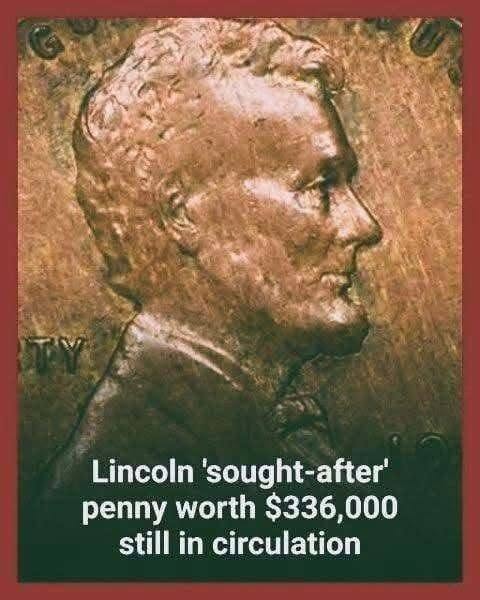
Experts estimate only about 20 genuine bronze cents were struck across the Philadelphia (no mintmark), Denver (“D”), and San Francisco (“S”) mints. Their extreme scarcity has driven monumental valuations, including a 2010 auction record of $1.7 million for a Philadelphia specimen and another selling for over $200,000 after being found in a school lunch.
Authenticity and the Great American Treasure Hunt
Initially dismissed by the U.S. Mint as counterfeits, genuine error cents were later authenticated as having the pre-war composition of 95% copper and 5% zinc and tin, distinguishing them from magnetic, rust-prone steel pennies. This sparked a lasting amateur treasure hunt using magnets, though most finds are altered coins or copper-plated fakes rather than the rare authenticated originals.
Pages: 1 2