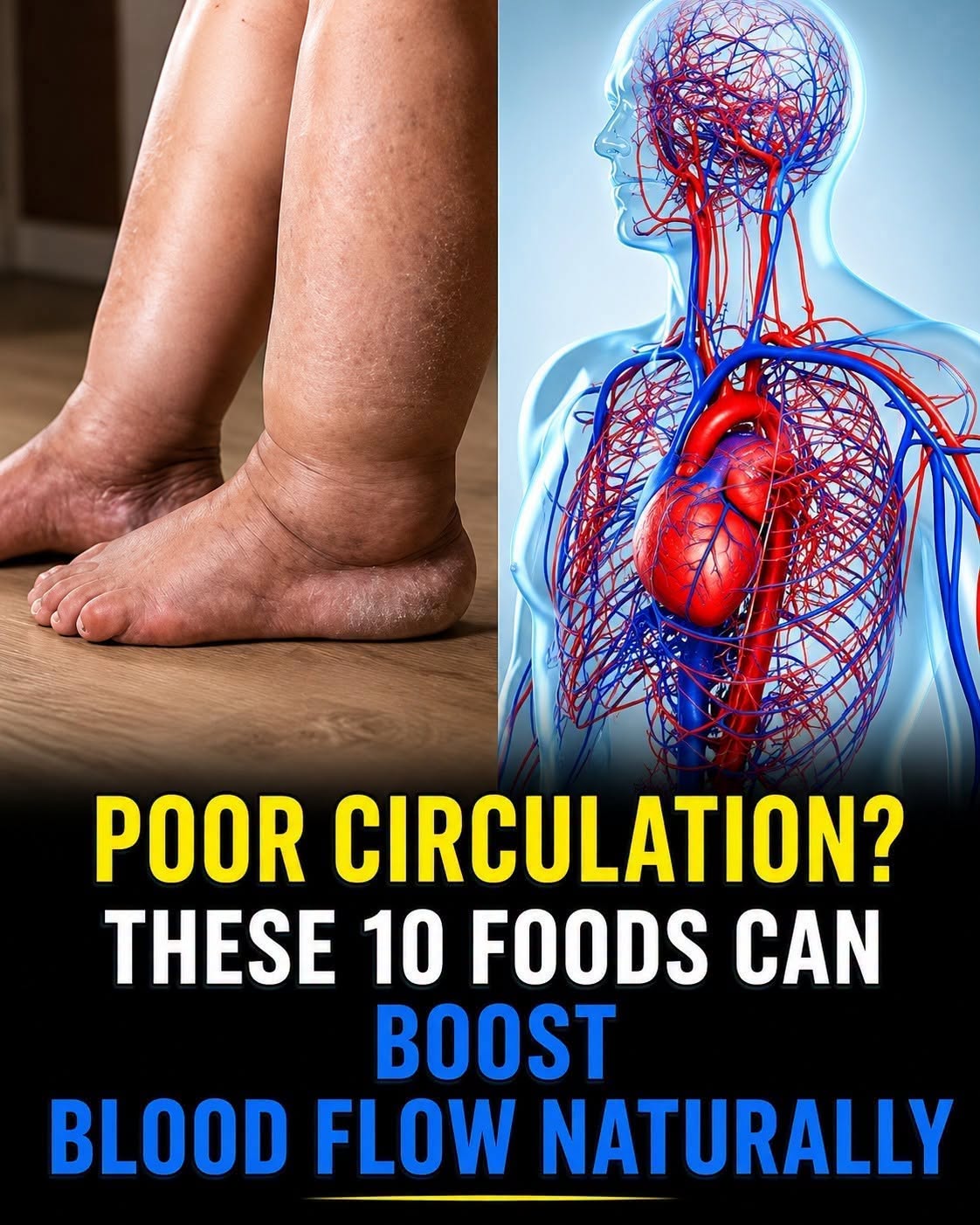
nerve conditions, diabetes, peripheral artery disease, and other cardiovascular conditions.
That means there isn’t one food that can “fix” poor circulation.
Instead, the best approach is to build an overall eating pattern that supports healthy blood vessels and cardiovascular function.
In this guide, we’ll look at 10 foods that may support healthy blood flow naturally, explain why they can be beneficial, and discuss when circulation symptoms should be checked by a healthcare professional.
What Is Poor Circulation?
“Poor circulation” is a common phrase rather than a specific medical diagnosis.
People
may use it to describe symptoms such as:
Cold hands or feet
Swollen ankles or legs
Numbness or tingling
Leg heaviness
Leg discomfort
Changes in skin color
Slow-healing wounds
The cause matters because these symptoms don’t all come from the same problem.
For example, peripheral artery disease (PAD) can develop when arteries supplying the legs become narrowed. Some people experience pain or cramping in the legs while walking that improves after resting.
Venous problems can produce a different pattern. When blood doesn’t return efficiently through the veins, fluid may accumulate
 Skip to content